How to ship Pokémon cards safely
From penny sleeve to toploader to the right envelope. A practical guide to shipping Pokémon cards safely, with tips for bpost and for cards worth real money.
In this article
- From penny sleeve to toploader to the right envelope. A practical guide to shipping Pokémon cards safely, with tips for bpost and for cards worth real money.
You traded or sold a card, and now it has to reach the other side in one piece. A card loose in a paper envelope almost always arrives with a crease. Five minutes of work and a few cheap materials prevent that completely.
The basic rule: sleeve it, stiffen it, keep it flat
Every shipment follows the same logic. The card goes into a penny sleeve first, a thin clear sleeve that keeps dirt and scratches off the surface. That sleeved card then goes into a toploader, a rigid plastic holder that will not bend. The combination does the real work: the sleeve protects the surface, the toploader keeps the card flat.
Always slide the card in with the sleeve opening facing down. That way it cannot slip out if the package ends up upside down in transit. Close the top with a team bag or a small piece of painters tape. Never stick regular tape straight onto the toploader, it leaves residue for the person receiving it.
What goes around the toploader
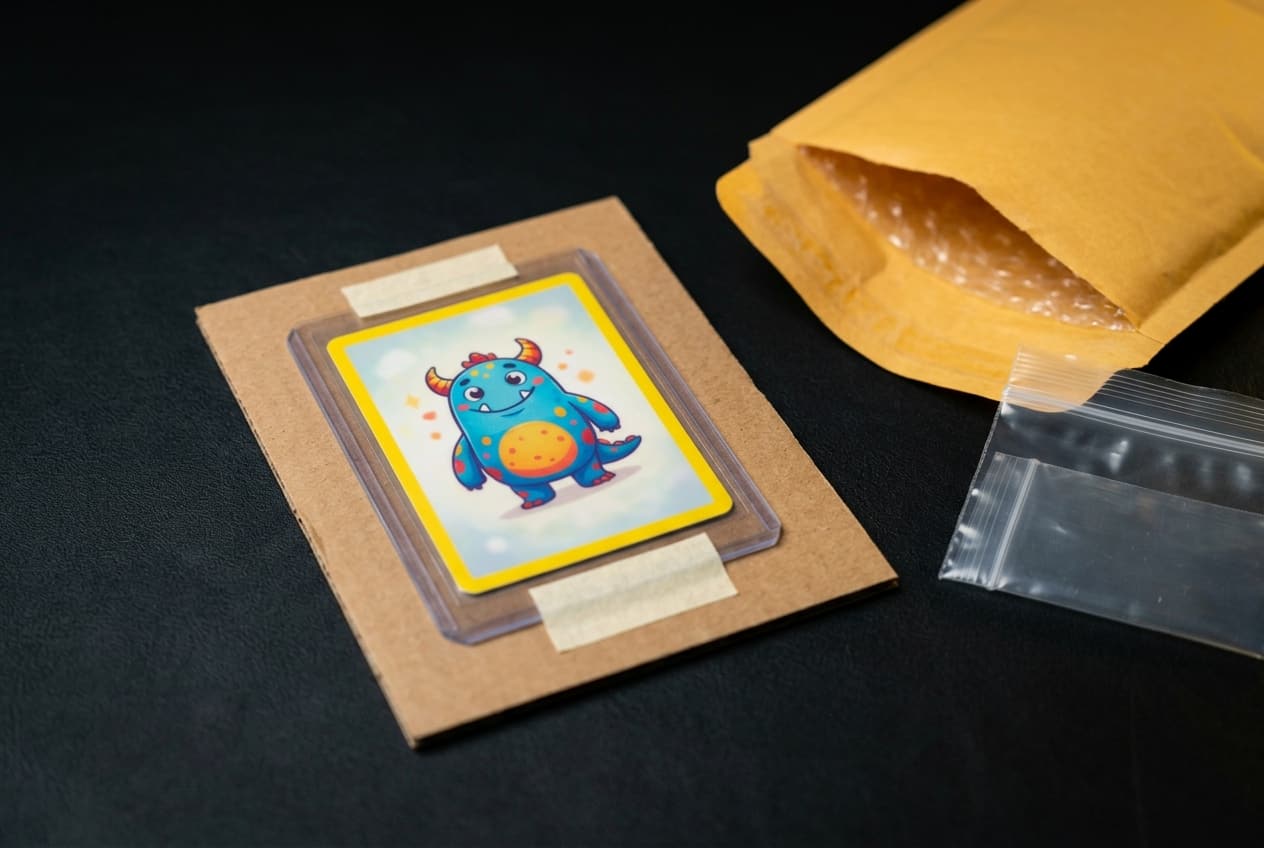
A toploader loose in a paper envelope is still a risk. Postal sorting machines press hard, and an envelope with one rigid object inside creases easily. So sandwich the toploader between two pieces of cardboard. A piece of a cereal box works fine, free and stiff enough.
Tape the toploader lightly to that cardboard so it cannot slide around. Movement is the main cause of damage in transit. Then use a padded envelope or a small letterbox-sized cardboard box.
Moisture is the second risk. An envelope sitting in a letterbox in the rain lets water through. Put the whole thing in a small resealable bag before it goes into the envelope.
Shipping from Belgium: which option?
For one or a few cards in a toploader you usually stay within regular letter dimensions at bpost, as long as the whole thing stays thin. That is the cheapest route, but there is no tracking. For cards worth a couple of euros that is fine.
Once real value is involved, tracking is worth the difference. Choose a barcoded parcel or a registered shipment. Also photograph the packed card and the address label before you hand it over. In a dispute that is often the only proof you have.
Thick cards and expensive cards
A graded card or a card in a magnetic holder will not fit a standard 35pt toploader. For those you need a thicker version, a 130pt toploader for example. Wrap the slab or holder in bubble wrap and use a box instead of an envelope.
For the most expensive cards, insure the shipment. Almost every buyer asks for it anyway, and it costs less than what you lose on a single package that goes missing.
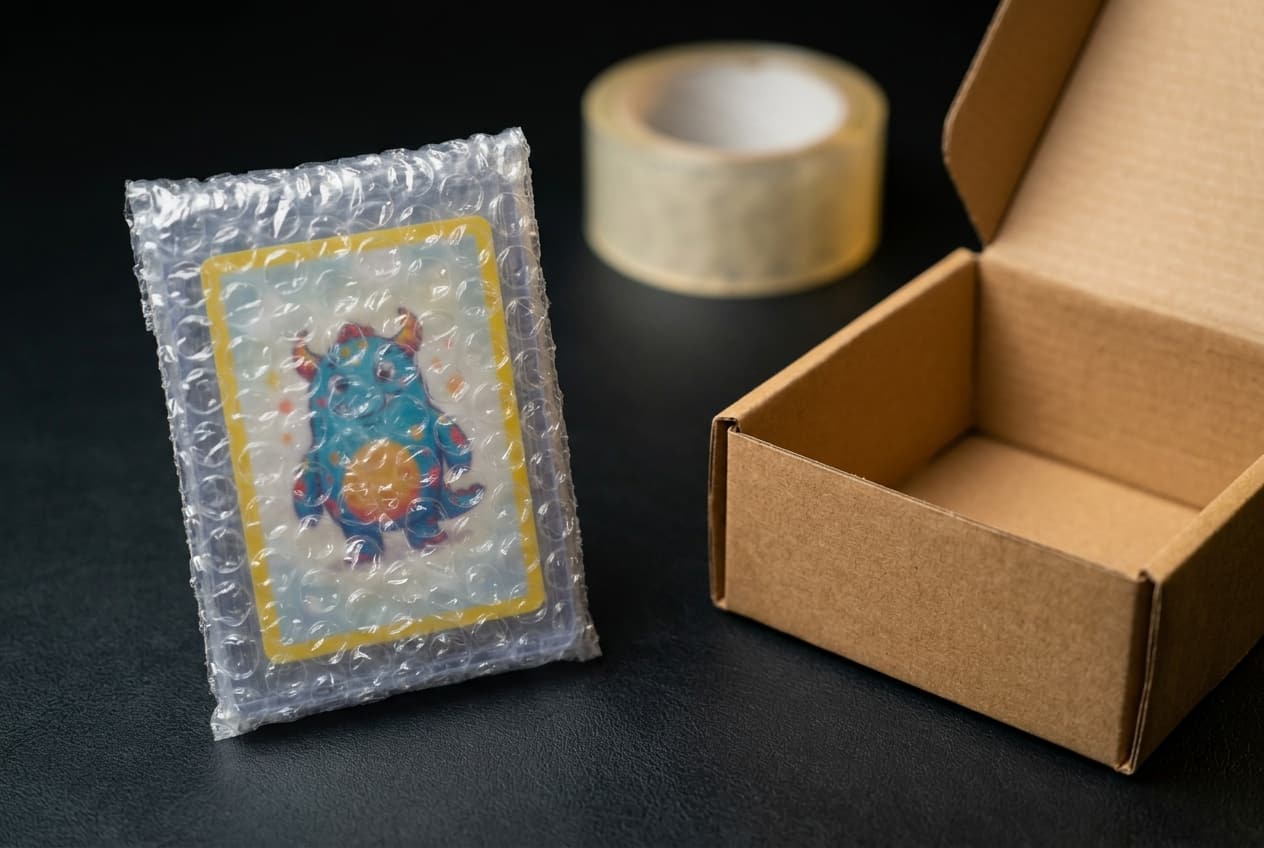
In short: sleeve, toploader, cardboard, waterproof bag, sturdy envelope. Five steps, a few minutes of work, and your card arrives the way it left. The materials cost less than most cards you will ever ship.
Do not have the basics yet? Below is what you need, shipped from Oudenburg with bpost.