How to Start Collecting Pokémon Cards
A complete beginner guide for new collectors and parents, with everything you need to start today.
In this article
- A complete beginner guide for new collectors and parents, with everything you need to start today.
You just got your first Pokémon cards, or you are buying them for your child, and suddenly the questions start. What do I actually need? How do I keep my cards in good condition? And how do I store everything neatly? Good news: starting is easier than it looks, and you do not need an expensive setup. In this guide we explain step by step what to look for, with a focus on the thing beginners overlook most: protecting and storing your cards.
Collecting, playing, or both?
Before you buy anything, there is one question that shapes everything: do you want to collect cards, play with them, or both? A collector looks for great cards and complete sets, often to keep and display. A player builds a deck to play with, so those cards regularly leave the binder and go back in. Plenty of people simply do both, and that is perfectly fine.
The answer decides what you need. Mostly collecting? Then a binder and solid protection are your most important purchase. Playing? Then you need sleeves and a deck box to keep your cards intact during play. Still unsure? Start with the basics that work for both, because you will need sleeves and storage either way.
Where to start: a few cards
You need cards to begin, of course. For a beginner there are a couple of logical entry points. A booster is a small pack with a few random cards: affordable, exciting to open and the easiest way to get a taste of the hobby. Want to be able to play right away? Then a ready-to-play deck is more convenient, because it contains a complete, playable deck without you having to build one yourself.
There is no such thing as "the right" set. The set you or your child enjoys most is always the best one to start with. One thing that matters: buy sealed products from a seller you trust, because fake packs do turn up with Pokémon cards.
The most important part: protect your cards from day one
This is the step beginners skip most often, and regret most afterwards. The moment you take a card out of the pack, it starts to wear. Fingerprints, scratches and bent corners happen faster than you think, and a damaged card loses value and is less enjoyable to display. The fix is simple and cheap.
Sleeves are thin covers that protect your card during play and storage. There are two types you will come across. Penny sleeves are ultra-thin and cheap: ideal as basic protection for your whole collection. For your playing deck you add a sturdier sleeve on top, often in a matte or clear finish. Matte sleeves reduce glare and shuffle more smoothly, clear sleeves show the full artwork. When buying, check for the standard Pokémon size (66 x 91 mm) so your card fits exactly.
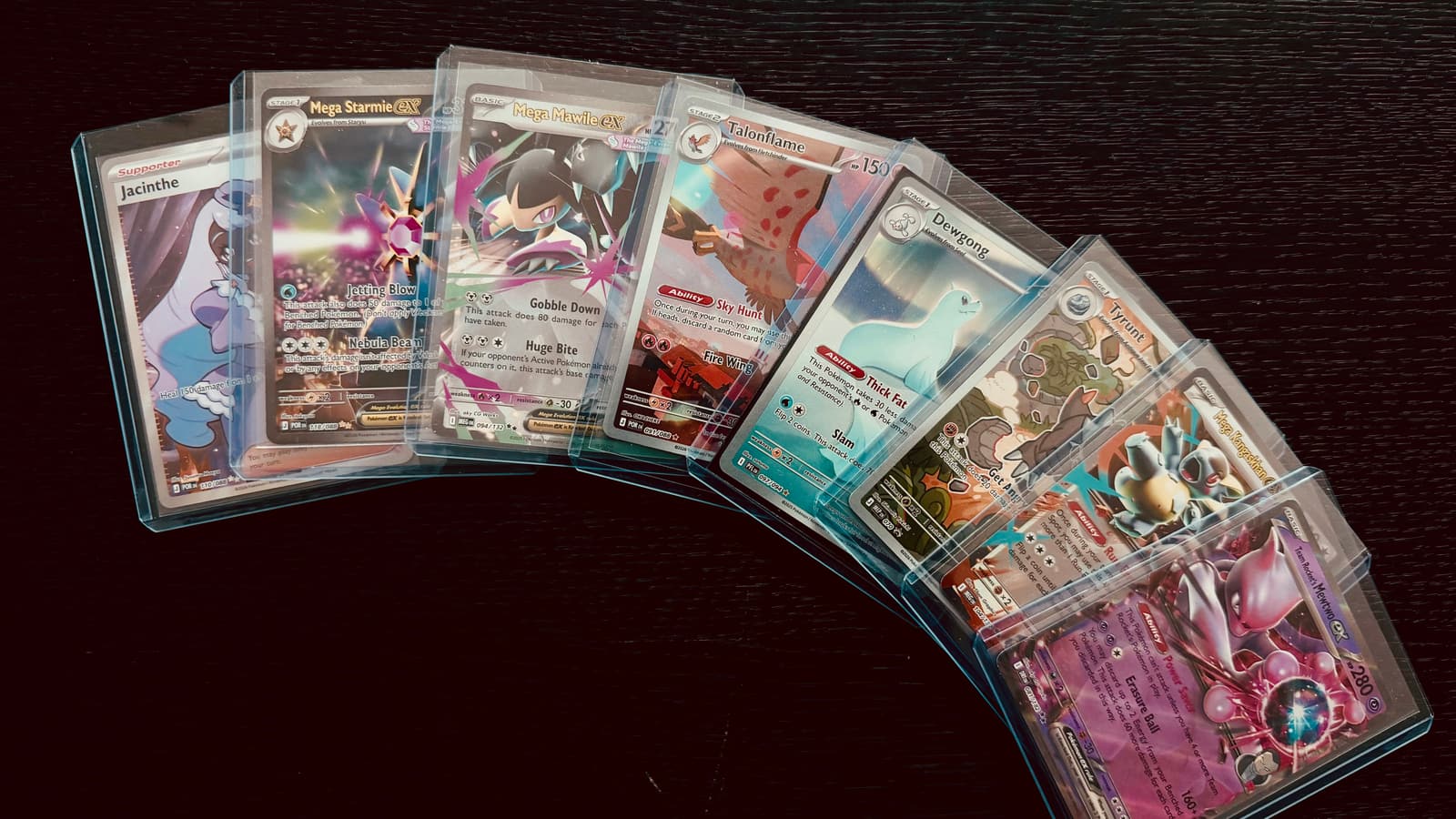
For your most valuable cards you also use a toploader: a rigid, hard plastic holder that protects your card from bending and warping. A sleeve protects against scratches, a toploader protects against deformation. For your best pull, like a full-art or a rare card, that is the difference between years of top condition and a crease that never comes out.
Our tip: protect right away, not later. A card that is already damaged will never go back to top condition. Just starting out? Then sleeves are literally the first thing you need, even before you grow your collection.
Storing your collection: binder or deck box?
Once you have a few cards, you want to find them back and store them well. There are two handy options, depending on what you do.
A binder is an album with clear pockets, perfect for displaying your collection, sorting by set and flipping through. For collectors, this is the favourite. Check the number of pockets per page (9-pocket is the standard) and how the cards go in: side-loading pockets hold your cards in place better than top-loading, so they will not slip out when you flip the album over. Want extra security? A zippered binder closes everything off completely.
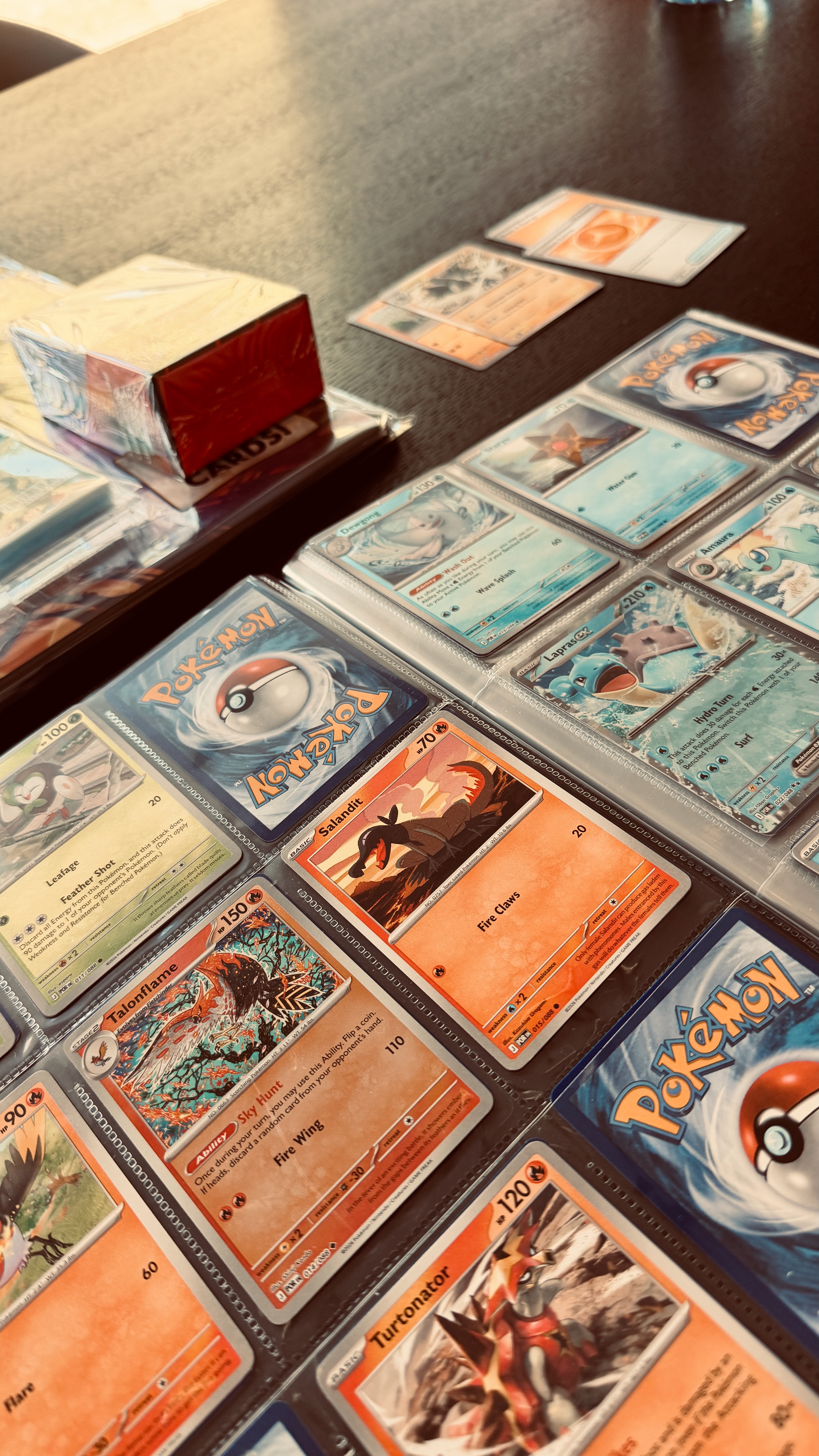
A deck box is a compact case that keeps your playing deck safe and easy to carry. That is especially useful if you play and take your cards to friends or a tournament. Check the capacity: a 60-card deck in sleeves quickly needs a box rated for 100+ cards. Many people use both: a binder for the collection at home, a deck box for the deck that travels.
5 beginner mistakes worth avoiding
Most beginners make the same mistakes, and they are easy to avoid. First: leaving cards unprotected and only buying sleeves later, once the damage is done. Second: buying too much too soon without knowing what you enjoy, so start small and build up calmly. Third: buying from unreliable sellers, which puts you at risk of fakes.
Fourth: focusing only on value instead of fun, because the hobby is more enjoyable when you collect what you genuinely like. And fifth: storing your cards randomly in a drawer or box, which damages them and makes them hard to find. With a little structure from the start, you avoid all of them.
Start with the basics
You do not need an expensive setup to start well. Three things are enough: something to begin with, sleeves to protect your cards, and a binder or deck box to store them. Start small, protect from day one and build up calmly as your collection grows. That way the hobby stays fun and your cards stay in top condition.
Want to see which sleeves, toploaders, binders and deck boxes fit your needs? Take your time browsing our accessories and pick what suits the way you collect or play. Shipped from Oudenburg via bpost, with delivery in 1 to 4 business days within Belgium.