How to spot fake Pokémon cards
Fake cards keep getting better, but a few simple checks catch most of them. Here is what to look for, from print quality to price.
In this article
- Fake cards keep getting better, but a few simple checks catch most of them. Here is what to look for, from print quality to price.
How to spot a fake Pokémon card
You buy a card online or at a fair, and something feels off. The colour looks wrong, the card feels too smooth, the price was suspiciously low. Fake cards show up in Belgium too. With a few simple checks you can catch most of them, no expensive tools needed.
Start with the print and the colour
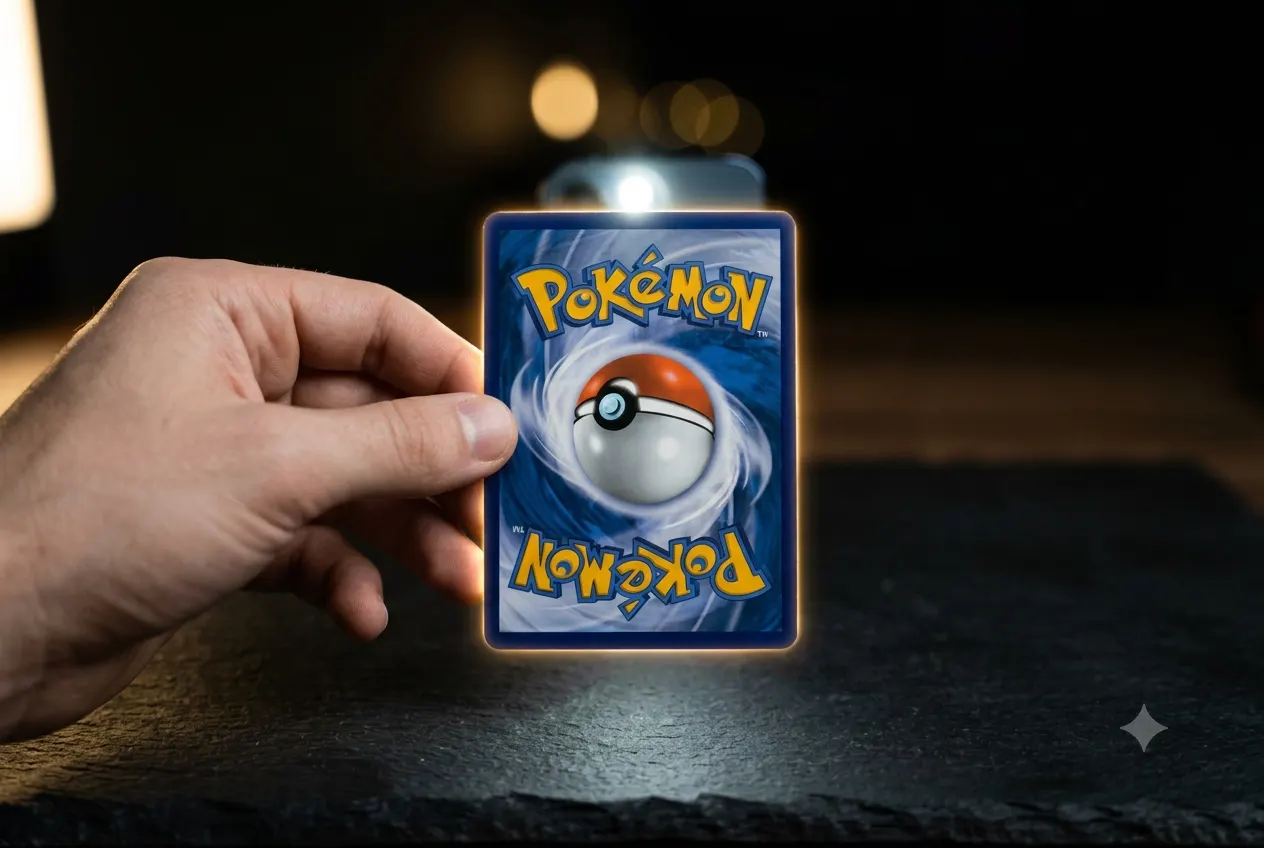
The quickest check is the back. Real Pokémon cards have a deep blue back with a sharp image. On fakes, that blue is often too light, too purple or printed blurry. So always flip a suspicious card over first.
Then look at the front. Real cards are printed sharply, with even colours and clean borders. Many fakes are slightly blurry, have oversaturated colours or a font that looks off. Spelling mistakes happen too, even in the name Pokémon. Is the accent on the e missing? That tells you enough. Also check the energy symbols: on fakes they are often too big, too small or placed wrong.
Feel the difference
A real card is sturdy cardboard with a light texture. Holo cards also have a pattern you can feel when you run a finger over them. Fakes often feel too smooth and too thin, or thick and stiff, as if there is a layer of plastic on top. Bend the card very gently between your fingers: a real card springs back smoothly, a fake often feels limp or rigid.
If you have handled a lot of cards, this becomes second nature. In doubt? Put a card next to it that you know is real and compare.
Do the light test
Hold a bright flashlight, your phone works fine, right behind the card. Real Pokémon cards have a thin dark layer inside that blocks light. You will see a faint, even glow. A fake usually lacks that layer: the light shines through brightly, or you see spots and streaks.
Always run this test with a real card as a reference, because the glow differs slightly per set. And never tear a card in half to look for the dark layer. That so-called rip test proves little and is guaranteed to destroy your card.
Watch the price and the seller
If a deal looks too good to be true, it usually is. A sought-after card worth a lot offered for two euros, a stack of rare cards for pennies, or boosters cheaper than anywhere else: those are red flags. Look at the seller too. No reviews, vague photos or only stock images? Be extra careful.
The biggest risk sits with single cards and cheap boosters on marketplaces. Buying sealed product from a trusted shop is the safest route. Then you know every card you pull is real.
Still in doubt?
Compare the card with a copy you know is genuine, do the light test and ask for a second opinion in a collector community if needed. Want to avoid the risk altogether? Pull your cards from boosters sold by a shop you trust, straight from official distribution and shipped fast from Belgium.